Saudi Arabia real estate remains one of world’s busiest markets despite global uncertainty: CBRE
Saudi Arabia’s real estate market remains one of the world’s most active, with Riyadh offices booming and new foreign property rules boosting investment, CBRE says.
Saudi Arabia’s real estate sector continues to rank among the world’s most active development markets, underpinned by non-oil economic growth, major infrastructure investment and regulatory reforms, according to CBRE’s latest market review.
While geopolitical tensions and global economic uncertainty continue to affect parts of the market, the consultancy said the Kingdom’s long-term development strategy remains firmly on track, supported by Vision 2030 projects, government spending and expanding private sector activity.
According to CBRE Middle East’s Saudi Arabia Real Estate Market Review for Q2 2026, non-oil economic activity grew 2.9 per cent year-on-year during the first quarter of 2026, helping drive overall GDP growth of 3.0 per cent.
The report said continued government capital expenditure is supporting the delivery of giga-projects, transport infrastructure, tourism developments and large-scale real estate schemes across the Kingdom.
Major project awards continued during the quarter, with Riyadh remaining the focal point for investment activity alongside Makkah, Madinah, the Eastern Province and Aseer.
Riyadh office market remains supply constrained
Government-backed developers including the National Housing Company (NHC), Diriyah Company, Expo 2030 Riyadh Company and Rua Al Madinah Holding continued to drive activity, reinforcing confidence in Saudi Arabia’s long-term growth strategy.
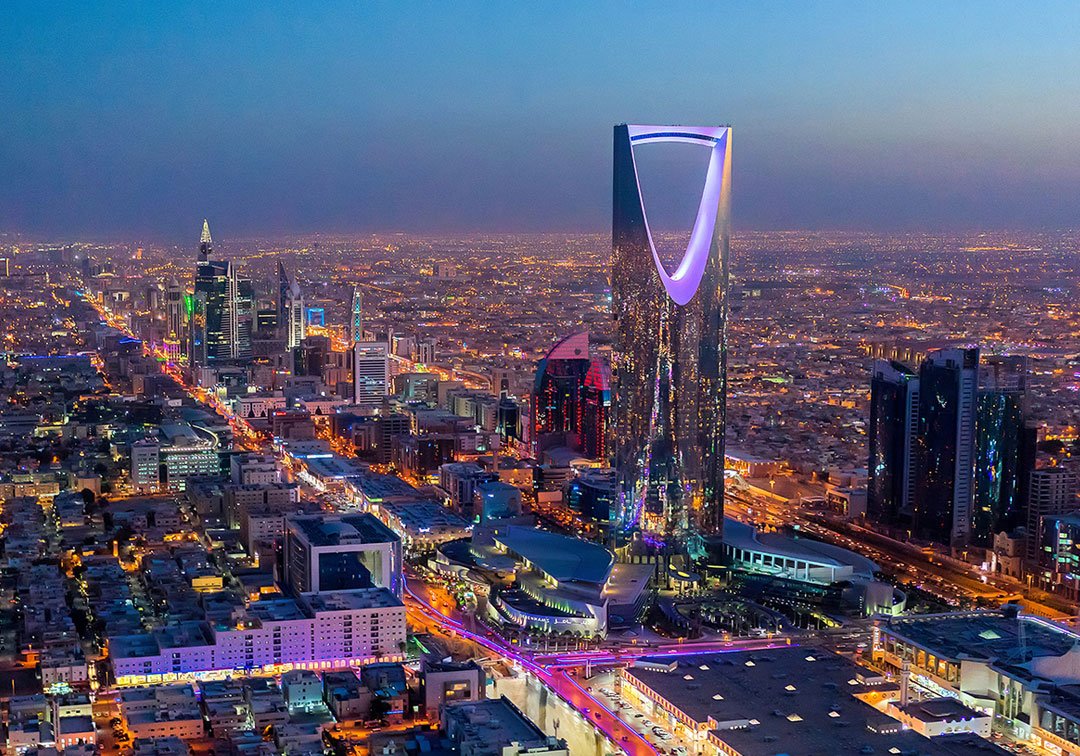
CBRE said the office sector continues to be one of Saudi Arabia’s strongest-performing real estate asset classes, particularly in Riyadh.
Demand for Grade A office space continues to exceed available supply as multinational companies establish regional headquarters under Saudi Arabia’s Regional Headquarters (RHQ) programme, while technology, healthcare, financial services and consulting firms continue expanding.
Riyadh’s office stock has now surpassed 6 million square metres of gross leasable area, with occupancy across prime office buildings remaining close to full capacity.
According to CBRE, continued competition for premium office space is supporting rental growth despite new developments entering the market.
Saudi residential market
Saudi Arabia’s residential market recorded lower transaction activity during the quarter, although house prices continued to rise nationally.
CBRE said residential transaction volumes across apartments, villas and land plots declined 14 per cent year-on-year to more than 41,000 transactions, while transaction values fell 27 per cent to nearly SR38bn ($10.1bn).
Despite the moderation in activity, the National Residential Price Index increased 2.6 per cent year-on-year, supported by continued end-user demand and land scarcity in key urban markets.
The quarter also marked the implementation of regulations under the Law on Non-Saudi Ownership of Real Estate, opening new opportunities for international investment in designated areas across the Kingdom.
Meanwhile, major master-planned communities continue expanding housing supply, including the planned delivery of more than 5,500 homes at NHC’s Murcia development in Riyadh by the end of 2026.
Retail spending and logistics remain resilient
Saudi Arabia’s retail market continued to benefit from stronger consumer spending and growing demand for lifestyle-led destinations.
According to Saudi Central Bank data, point-of-sale spending increased from SR58.4bn ($15.6bn) in April to SR63.1bn ($16.8bn) in May, generated by a record 1.1 billion transactions.
Approximately 400,000 square metres of additional retail space is scheduled for completion before the end of 2026.
Despite the growing supply pipeline, retail vacancy rates remained around 6 per cent, while prime rents in leading super-regional malls held steady at approximately SR3,275 ($873) per square metre.
CBRE also highlighted continued strength in Saudi Arabia’s industrial and logistics sector, with demand for modern warehousing driven by manufacturing localisation, e-commerce growth and investment in transport infrastructure.
Rental growth across key logistics markets in Riyadh and Jeddah remained robust during the second quarter due to limited availability of high-quality space.
Hospitality outlook remains positive
Saudi Arabia’s hospitality market experienced softer performance during the first half of 2026 amid weaker corporate travel demand and regional uncertainty.
However, CBRE said the long-term outlook remains positive, supported by higher domestic tourism spending, ambitious international visitor targets and a substantial hotel development pipeline.
The Kingdom’s hotel inventory reached approximately 177,000 keys by the end of the second quarter, with major developments continuing across Riyadh, Jeddah, Makkah, Madinah and the Red Sea coast.
Matthew Green, Head of Research at CBRE MENA, said: “What is increasingly evident across Saudi Arabia is the scale of execution taking place on the ground. From major infrastructure projects and commercial developments to new residential communities and tourism destinations, investment is increasingly translating into delivery.
“Supported by a growing non-oil economy and progressive regulatory reforms, including the introduction of the new non-Saudi property ownership framework, Saudi Arabia is continuing to strengthen its position as one of the most compelling real estate investment destinations globally. The market is now transitioning into a new phase, where delivery, occupancy and investment performance are becoming just as important as the scale of the development pipeline.”
Credits & Disclaimer: This article are credited to the Associated Press, it's authors and editors. Likewise, the images are for illustration purposes only and credited all to their respective owners. The accuracy of the article is subject from the information grabbed from the sources at the time of posting this article.