
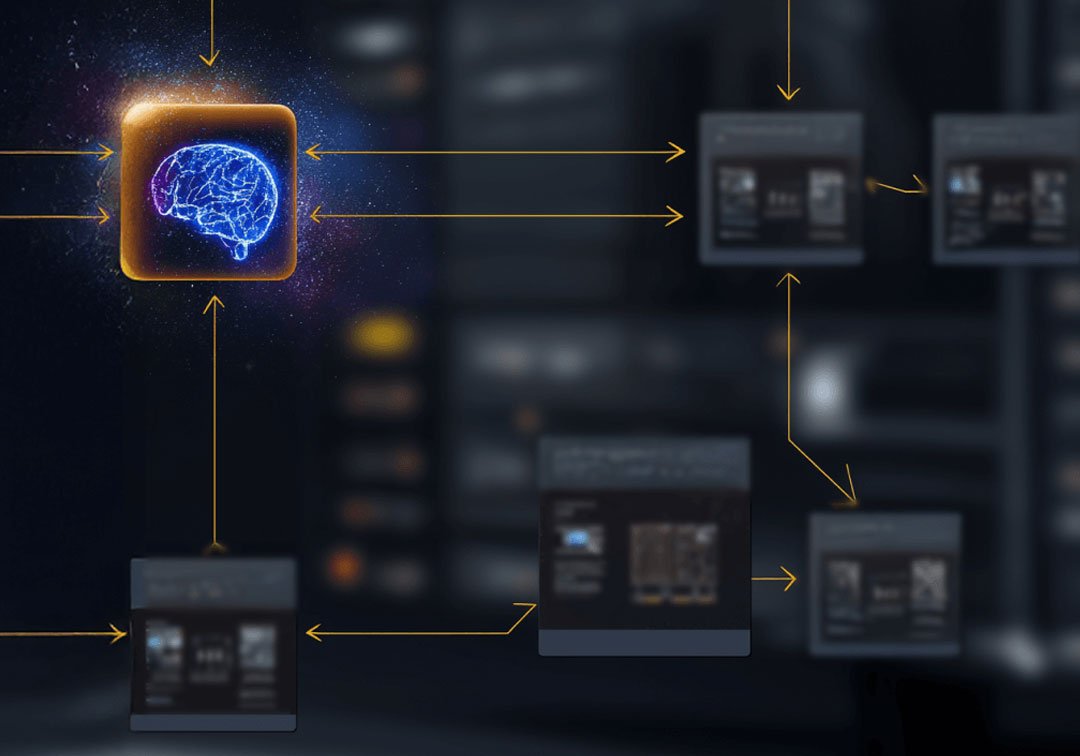
AI transformation should be redesigning entire workflows, business leaders say
The biggest gains from AI will come not simply from giving employees access to new tools, but from changing how organisations operate.
Businesses need to move beyond using artificial intelligence (AI) as an individual productivity tool and start redesigning entire workflows around the technology, according to industry leaders.
Speaking on a panel titled “AI Transformation: The Human Capabilities for Success,” executives argued that the biggest gains from AI will come not simply from giving employees access to new tools, but from changing how organisations operate.
The panel, held at Abu Dhabi’s HUB71, brought together Wael Aburida, co-founder and managing partner of AI-native venture studio Fikra Ventures; Ibrahim Badredeen, senior director of leadership development at Korn Ferry; Claudius Boller, GM of Middle East at Wonderful; and Peter Zemsky, CEO of Lexarius and Professor of Strategy at INSEAD.
While many companies began rolling out generative AI tools to employees around 18 months ago, the panellists said the impact on overall organisational performance has often been limited.
The opportunity becomes considerably larger when AI is embedded into complete business processes.
Boller highlighted the example of a UAE company procuring around 20,000 products and services each month. Agentic AI helped reduce a procurement process that previously took six to nine days to around one hour, while greater supplier transparency and competition reportedly cut spending by 20 per cent.
Aburida offered another example: an “agentic chief of staff” that analysed approximately 40,000 conference attendees, cross-referenced them with his LinkedIn network and identified the 100 most relevant people to meet. It then drafted personalised outreach in his tone of voice.
He also pointed to financial services applications capable of processing more than one million loan applications per month, with each application handled in under 60 seconds.
Why AI pilots struggle
Despite billions being invested in AI, turning experiments into functioning business systems remains difficult.
The panel referenced approximately $30 billion to $40 billion in global investment in AI agents, while noting that only around 5 per cent of agentic AI initiatives have reportedly reached production.
A common mistake is launching dozens of pilots without committing sufficiently to any one of them.
Instead, panellists argued that senior executives should identify a high-value problem, take ownership of it and commit the resources needed to demonstrate measurable commercial impact.
Badredeen said leadership is central to that process. Korn Ferry research involving 500 regional leaders who had successfully adopted AI identified capabilities including clear communication, employee engagement and the ability to operate amid ambiguity.
Leaders also increasingly need to act as translators between technical teams and the wider business, turning the capabilities of AI into specific commercial problems that technology can address.
Humans remain central to AI
The panel also warned that greater adoption brings risks, from data confidentiality and inadequate controls around autonomous agents to longer-term human de-skilling.
AI agents require a secure “harness” defining what information they can access and what actions they can take, rather than simply being given an objective and allowed to pursue it autonomously.
Zemsky, meanwhile, highlighted the potential for AI to help solve the skills challenge itself. Lexarius demonstrated AI-enabled simulations that allow employees to practise situations such as interviews and difficult workplace conversations before encountering them in real life.
As AI takes over more tasks, the panel identified critical thinking, judgement, storytelling, communication and human connection as increasingly important capabilities.
The next phase of AI transformation, the discussion suggested, will therefore be about much more than technology.
Companies may have increasingly similar access to powerful AI models. The distinction will be how effectively they redesign their organisations and develop the people working alongside them.
Credits & Disclaimer: This article are credited to the Associated Press, it's authors and editors. Likewise, the images are for illustration purposes only and credited all to their respective owners. The accuracy of the article is subject from the information grabbed from the sources at the time of posting this article.